December 31, 2008

A Princess Remembers by Maharani Gayatri Devi

Recently I picked up the book A Princess Remembers by Maharani Gayatri Devi. It was one of those spontaneous buys, where I knew nothing about the reviews, or what the book holds. I knew who was Maharani Gayatri Devi and the blurb sounded like a story of a girl who has become a woman through the pages.

I started reading it, was immediately absorbed, and moved through a good 200 odd pages very quickly. Life at Cooch Beher as a young girl in complete awe of her elder brother followed by her move to England for studies and her long courtship with the Maharaja of Jaipur. Interesting to note is that the Maharaja already had two wives whom he married before he turned 18, and they were arranged for him by his father. She was the only one who drew his attention genuinely. How would the two wives take to this love affair of the Maharaja, it is enlightening to see how they accept what their husband wishes of them. They serve to be a guide to the new Maharani after the wedding, and help her in getting accustomed to the new culture and form of life.

We breeze through their young days, her siblings’ weddings, children and deaths. We see hoe the royalty married all across India, in just a search for a perfect match and relationship for their states in many cases. We see their princely way of life, and how they envisaged a change for India and their subjects with the forming of a republic India after the independence struggle. Many of the rulers were comfortable in their positions and interactions with the British that very few managed to surface anywhere near the freedom struggle which was led by men of more humble statures. These royals were very well read, worldly wise, but a threat to their position kept them away from the struggle to free India from being a territory of the British.

Independence and selfishness came hand in hand almost all across India. All important positions fell into the only party existing and the people, who stood with them through the fight, did not see an alternative in front of them. Here we see how the princely states came to their rescue, to the rescue of their people, the people who have forever contributed to their privy purses. It would be too simple to say that they came up in sheer love for their people, I believe they also saw that their say in state and politics was diminishing with each passing day, hence this can be seen as their way of some kind of revolt on the part of the Indian royalty against the Congress rule in their states. I thought of them as selfish in only venturing into politics, when they were stripped of their powers and privileges, but maybe the fact that they saw the way the their states were suffering, did contribute in making a successful opposition party in India. The people were more or less not in the habit of rising in opposition, and even if they did they would surely be represented by some who would only change the ruling party but not the corruption and squander which the country was being subjected to. (Doesn’t it somehow just resemble today’s world? I wonder where and who are going to make a good opposition this time? )

On reading this book, I saw the royal ways of life which were in the past, and how they adapted to the changed united India. It is a good light read, with some thoughts which do rummage through your head as you flip the pages of this Indian history, lifestyle, autobiography mix.

PS: This has been cross posted at Le Books blog, which is a new online book store for book enthusiasts. They have some wonderful features like book lists which offers some great reads.

December 29, 2008

Christmas at the beach

My very first trip to Goa.

Having heard so much about the idyllic beauty and surreal calm of the goan beaches, I was all in to experience this for myself.

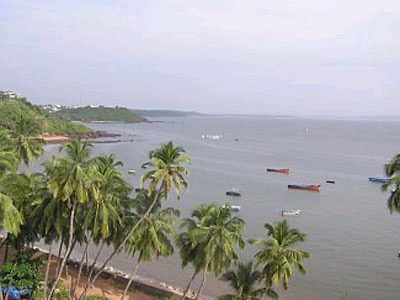
I put up here only snaps to do all the talking.


Reached Goa - Sunny and bright

View from Chapora fort
Way up to Chapora fort
Fresh breakfast at Fisherman's shck on Baga
View from the shack
At Anjuna

On route to Vagator
A game of scrabble at Bar Eclipse

A Mumbaikar's tale

I do not know who wrote this article, a Mumbaikar for sure.

I received this as a forward, and for once, I saw a different story unfold than the usual rant about terrorism and nuclear power and so on. This is something which shows how a crack at the edge of a wine glass does eventually leak all the wine and eventually leave just an empty glass.

Here is the article below.


Me Mumbaikar

The gruesome battleground in South Mumbai has left us Mumbaikars fed up, scared, angry, willing to lash out, especially at the politicians.

We now have an incoherent rant against "the other" or "the system". My heart goes out to the victims and this article in no way downplays the magnitude of the human tragedy. Yet as a lifelong Mumbaikar, I have not been able to shake a feeling that people have deliberately refused to grasp the essence of the problem because it is not conveniently gift wrapped with a bow on it.

Simply put, there is no "other" to blame. Mumbaikars over decades of greed and rapacity, have destroyed rule of law and corrupted the systems which should have protected us. We are the system. We are the reality of Mumbai. We are its pestilence. It is convenient to demand action, to demand results, somehow, anyhow.

Can we believe in a fantasy that a bureaucracy, government and law enforcement apparatus which have never delivered anything meaningful which we have ourselves strangled over the years, can suddenly start delivering results in one narrow sphere of security?

AIDS victims don't die of AIDS.. They die because AIDS reduces immunity and invites secondary diseases to feast on the weakened host. An AIDS patient can die from a common cold. Terrorists only descended upon the enfeebled carcass of Mumbai to deliver the coup de grace. They are the opportunistic secondary infection. Mumbai was always a symbol of opportunity and accomplishment, with the accompanying corruptions of any big city. But what is Mumbai today?

It's a ghettoized city of intolerance where Raj Thackeray can rouse lakhs of people into hatred of an "other", where vegetarians can discriminate openly against the "other" in their buildings, where Muslim enclaves make the "other" uncomfortable in their midst, where a parallel economy and a parallel justice system can thrive.

It is a city of corruption, where the police force has been emasculated, where constables have to take bribes to pay off the cost of their postings, where senior officials operate openly in collusion with industrial houses, where human trafficking and child abuse are openly tolerated in plain sight at traffic signals.


It is a city of decay, where greedy and corrupt builders can destroy every last inch of breathing space, documents can be faked, BMC officials bought off en masse, protesters can be bullied and threatened, restaurant owners can dump their daily trash in any quiet street corner.


It is a city of harassment, where kids on loud motorcycles can whiz about unstopped, where loud pandals and religious displays disturb people way into the night, where poor people live in constant fear of harassment by the police.

It is a city of neglect, where we cannot even point to one bylane free of potholes and garbage, not for technical reasons but because it fuels the perpetual motion machine of contracts and corruption.

It is a city where the local governance become an enemy of the people, grabbing parks, destroying open mangroves, dumping huge toxic waste in plain view of its citizens.

Ask a Mumbaikar from the slums what fun it is to get his kid's birth certificate from the BMC, to get past a police check, to get a lawyer who won't cheat him for common things,to get a judge who won't delay his case indefinitely. A poor "unconnected" person or a single woman would think thrice before walking into a police station to get help and even then would not do it.

Above all Mumbai is a city of temporary convenience and compromise with no core values left to hold on to. The euphoria of economic growth justified every short cut and every depredation. Beneath the facade, Mumbai fell apart street by street, tree by tree, victim by victim. Mumbai is not an international city, it is an international joke. It is easier to take offense or retreat behind clichés, than to sincerely ponder the truth of this statement. The city cannot provide roads, fire service, ambulance service, police safety to its people.

Those who feel it is "part of the charm" to walk past open garbage and people defecating, to drive on wretched roads, to not have any place to take your child to play, to have parks grabbed by local slumlords, are in denial about their hometown. They add to the apathy which keeps it in decline. We try to talk ourselves into believing that the human vibrancy covers up the physical dehumanization.

Each and every one of these acts is perpetrated by a Mumbaikar. Each incident is like an incident of unprotected sex which takes the victim closer to the fatal disease. Each instance of apathy is just like one who cannot be bothered to wear a condom.

A successful crime reduction effort in New York is called "Broken Windows". Consider a building with a few broken windows. If the windows are not repaired, the tendency is for vandals to break a few more windows. Eventually, they may even break into the building. Small crimes, if not stopped lead to large crimes, hence even a broken window should be pursued and punished by an alert citizenry, equipped police force and effective prosecution system. This indicates of the interconnectedness of things.

Sorry to say, neither protests nor candles nor political resignations can help us. Not even an election. Who will you vote for? Throw out Manmohan and bring in Advani? There is no "One" who will sweep in on a white horse and save us. The world is now too complex and too interconnected for a single Obama or some mythical Kalki to come in and sweep clean with a magic wand. That only happens in films.

Until and unless there is a mass movement of self-realization on the scale of the freedom movement, the city will continue to bleed. A corrupt, weakened and demoralized force is not suddenly going to wake up and become a crack squad. A polity used to the easy days and fat life is not suddenly going to snap into action when it has been unable (despite similar outcries) to even keep the Mithi clear or keep the highway free of potholes.

Let's not glamorize the spirit of Mumbai or the beauty. It is purely money power and film dazzle which keeps this image intact. Neither Mr. Tata with his billions nor Mr. Bachchan with his pistol was there to save us on Wednesday night. We were saved by lower middle class jawans who on a normal Sunday would not even be allowed to enter the Taj or Oberoi by the security, who cannot even afford a Thums Up at Souk. Do we even deserve these amazing young men to fight and die for us when every public figure and Page 3 celebrity is on air spewing verbal diarrhea about our fear and trauma? The very same businessmen who pay customs and excise officers to look the other way ten times a day, now want them to be vigilant the eleventh time and catch the arms. We have forgotten the RDX which landed under very noses of Customs in 1993.. The same citizenry which doesn't care if builders illegally encroach approach areas and roadsides, now want to know why fire forces can't do their job. The same contractors, who cheat and embezzle funds meant for equipment for cops, are now furious about the inadequate body armor and .303s. All because "our" Taj and Oberoi are under attack.

Where goes Mumbai, so the rest of the nation. Governance and rule of law are at an all time low. Rights of poor people and middle class urban dwellers are trampled brutally. The backlog of cases and toothless enforcement makes a mockery of the Constitution which has enough teeth in it for many common problems.

We had a window of unprecedented growth where we could have set systems and infrastructure straight.. We did not, instead revelling superficially in our new -found easy wealth and sweeping any honest inquiry and intellectual thought process under the carpet.

Today we find that the much-feted titans of industry and finance were drunk on a global binge of easy debt and bogus stock valuations, and that the real growth has not traveled to the people who needed it, that real fundamental nation building value has not been created to the extent it was believed.

Today we need the army to throw out Lashkar from Colaba Causeway, what will we say when Naxalite cadets show up in Chennai? We always say "Me Mumbaikar Aahe". This is us. We are the ones who whittled away like termites at the gates and then threw down a red carpet of blood for terrorists to waltz in and shoot up our town like some drug-crazed teenagers on a weekend spree.

Only a Mumbaikar can truly understand that feeling of enraged impotence at the sight of these animals strolling down our historic downtown redefining forever the Mumbai taunt "Baap ka road hai" We are not to blame for their inhuman choice to perpetrate violence upon innocents. No secularist, no apologist, no CNN reporter, can justify that action. But we are to blame for our failure to protect ourselves and we are to blame for our inability to change the systems that made it possible from a fundamental level. Unless we re-engage our civic society as responsible and honest citizens of our own free will, we cannot expect better from our institutions.

Let's start with the hard, thankless and unglamorous task of fixing the broken windows and potholes. We have a very long way to go before reclaiming our Maximum City from what we have allowed it to become. Only then can we show the lead to the rest of the nation as we have always prided ourselves on doing.

With regards and be safe,

Anonymous Mumbaikar

December 22, 2008

To Visit # 2 Goa

In quest for the perfect holiday, I am looking up al that needs to be seen in the culture and party destination of Goa.

Historical

Aguada Fort: Immediately south of Candolim, on the end of a peninsular region. Built mainly for protection from susceptible attacks. Portuguese for water, and had been a fort where most ships docked for water along their long voyages as there was a spring within the area the fort was built. Also the locale for the famous Dil chahta hai shootings! (I am not certain, unless I visit this place, as some information I found points towards Chapora fort as the one where the shooting for the film happened. This fort is also said to house the Central Jail in today’s time.)

Tiracol Fort: At the northern tip of Goa, this fort houses the statue of Jesus on the rock. This is way north as compared to all the other touristic areas, so maybe you might have to skip it for a later time.

Cabo Fort: This is the residence of the Governor; you can not hence enter the fort. It lies in a peninsula at Dona Paula.

Church of Mae de Deus or Mother of God: Set in a very beautiful locale in Saligao, and was named after a statue which was housed in a convent which does not exist anymore. One of the few churches built in true Gothic style.

Cathedral in Old Goa: This portrays a classic example of the Roman Catholic rule on the shores of Goa. The cathedral houses one of the largest bells in the world, and has 14 chapels. It houses a cross on which the vision of Christ is said to have been seen around 1900s.

Basilica of Bom Jesus: This basilica in Old Goa is said to house the mortal remains of St. Francis Xavier, who was entrusted with the task of spreading Christianity in the Portuguese colonies in the east.

Tambdi Surla Temple: The oldest temple in Goa, built in true Jain style and 65 kms from Panjim.

Mangueshi Temple: Lord Shiva temple, which draws crowds from all over. An interesting fact is that you can not enter right upto the lingam here, unless you are of a particular caste

Arvalem Caves: These are said to be the caves where the Pandvas lived during their exile, hence also called the Pandava Caves. The caves are situated 100m away from Sri Rudreshwar Temple and Arvalem waterfall one of the most picturesque site of the town of Arvalem. 9 kms from Bicholim town.

Apart from the ones listed above, there are many more interesting places which I came across and I need to go and see for myself which are the best of the lot!

Adventure

Crocodile trips and Dolphin trips: You can take a half day cruise to see crocodiles at the back waters and the dolphins at the sea. It said one can also try to swim with the dolphins!!! I am so so keen to do that. I am not to sure how true this should be. I am sure they are eventually wild and can not be completely let to be with tourists in the vas ocean. Yet to be seen whether the swimming actually does happen.The crocodiles I believe should be closer to the mouths of the rivers, or backwaters. They are mainly freshwater or river water animals and would not venture out into the sea.

Water sports: Water skiing, water scooter, wind surfing- a blend of surfing and sailing

Paragliding: This is available across most locations and if you are closer to any of the resorts then an easy 300 rupees more is what you would have to pay for the same.

Scuba Diving and Snorkelling: These are two underwater expeditions on can have for starting Rs.2000/-. I found Goa Aquatics to host a wonderful Scuba diving discovery experience at the island off the shores of Calangute beach. They provide all the equipment, and give you a brief learners stint also to ensure safety and a true underwater experience.

Food and Shopping

Shopping is an all round activity, which is best done with bargaining and along the Calangute, Candolim and Colva stretch. The art and crafts of Goa predominantly are Creative Pottery, Shell Work, Furniture, Brass Work, Bamboo Work, Papier-Mache. All these contribute to a large extend as the cottage industry sector in Goa.

The staple food of Goa is fish and rice in various forms and spices. The preparation of the same dish will vary in taste at North Goa and South Goa. The shack eating experience is the best to savour Goan delicacies. They will also come and check on how you would like your fish!

Some famous dishes to try out:
Vindaloo
M
utton xacutti
Ape de Camarao

Brittos: This place on the Baga beach is said to be awesome for its food and ambience.

Bobs Inn: Good steaks, again on Candolim- Baga stretch

After Seven and Rustlers: Situated along the Calangute – Candolim belt.

Holiday Street: Situated at Candolim for all kinds of cuisines ranging from Goan to Kashmiri to Greek.
Martins: It is considered an institution in itself, serving authentic Goan delicacies and an ambience to experience

Not to miss

Panjim: The many squares in Panjim, and the houses which line these streets with their tiled roofs and balconies jutting out onto the streets.